The embryo transfer is one of the most significant milestones in your IVF journey. After weeks of injections, monitoring, and emotional highs and lows, the embryo is finally where it needs to be. Now comes perhaps the hardest part — the two-week wait — and the question on every patient’s mind: What should I do, and what should I avoid?
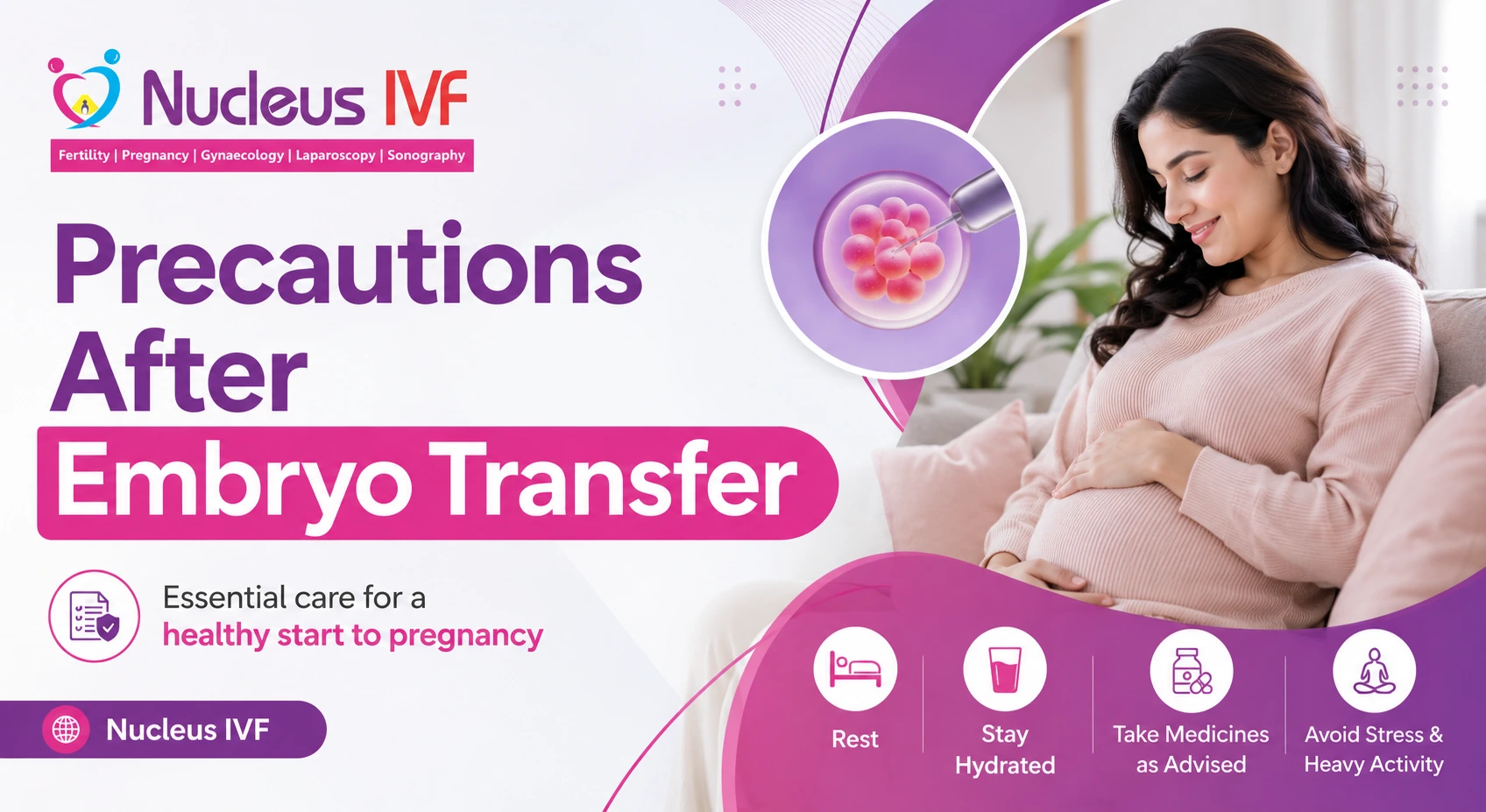
Taking the right precautions after embryo transfer can support implantation and give you the best possible chance of a successful pregnancy. Here’s a comprehensive guide to help you navigate this critical window.
Rest – But Don’t Overdo It
One of the most common misconceptions is that you need to stay in bed for two weeks after transfer. In reality, complete bed rest is neither necessary nor recommended. Light activities such as gentle walks, reading, or working from home are perfectly fine and can even reduce anxiety.
However, avoid strenuous physical activities like heavy lifting, intense workouts, running, or high-impact exercise. Your body needs calm and stability as the embryo attempts to implant into the uterine lining.
Follow Your Medication Protocol Strictly
After embryo transfer, your doctor will prescribe progesterone supplements (vaginal pessaries, injections, or oral tablets) along with other supporting medications. These are non-negotiable.
Progesterone is essential for preparing the uterine lining to receive and sustain the embryo. Missing a dose can have a real impact on implantation. Set reminders if needed, and never stop or alter your medications without consulting your fertility specialist.
Eat Well and Stay Hydrated
There is no magic “implantation diet,” but balanced, nutritious eating supports your overall well-being during this period. Focus on:
- Whole grains, lean proteins, and fresh vegetables — rich in folate, iron, and antioxidants
- Warm foods — many cultures and practitioners recommend avoiding very cold foods during this phase
- Plenty of water — staying well-hydrated supports healthy circulation and hormone balance
- Pineapple core — a popular (though not clinically proven) tip due to its bromelain content, believed to aid implantation
Avoid alcohol, caffeine in excess, raw or undercooked foods, and processed junk food.
Manage Stress Mindfully
Emotional stress will not directly cause a failed implantation, but chronic anxiety does affect your body’s hormonal environment. Give yourself permission to rest mentally, not just physically.
Practices like gentle yoga, guided meditation, deep breathing, and journaling can help. Lean on your support system — a partner, close friend, or counsellor — and remember that it’s okay to feel anxious. You are going through something profound.
Avoid Heat Exposure
High body temperatures can be harmful in early pregnancy. Avoid:
- Hot tubs, saunas, and steam rooms
- Extremely hot baths
- Heated blankets over the abdominal area
A warm (not hot) shower is perfectly fine.
Watch for Warning Signs
While mild bloating, light spotting, and breast tenderness are normal after transfer, contact your clinic immediately if you experience:
- Severe abdominal pain or cramping
- Heavy vaginal bleeding
- Fever above 38°C
- Signs of Ovarian Hyperstimulation Syndrome (OHSS) such as excessive bloating, nausea, or difficulty breathing.
When to Take a Pregnancy Test
Your clinic will advise you to return for a blood beta-hCG test approximately 10–14 days after the embryo transfer. Resist the urge to take a home pregnancy test too early — it can give misleading results and add unnecessary anxiety.
The two weeks after embryo transfer are filled with hope, nervousness, and anticipation. While there is no guaranteed formula for success, taking these precautions puts you in the best possible position. Trust your body, follow your doctor’s guidance, and be gentle with yourself — every step you’ve taken has brought you closer to your dream.
At Nucleus IVF, our team is with you at every stage of your journey. Reach out to us anytime with your questions or concerns.
Dr. Pritam Prakash Sulakhe

Dr. Pritam Prakash Sulakhe
author
Dr. Pritam Prakash Sulakhe has completed his MBBS from B J Government Medical College , Pune which is one of the top medical College in India. He continued his post-graduation as DGO at same institute. After that he opted for Diplomat Of national Board In Obstetrics and Gynecology from Kerala Institute Of Medical Sciences Trivandrum, which is one of the most prestigious institute from South India.
