Starting IVF is a significant decision emotionally, physically, and financially. It’s natural to want the very best outcome on your first attempt. While no fertility specialist can guarantee success in a single cycle, there is a great deal you can do to optimise your body, your mindset, and your preparation to give yourself the strongest possible start.
Here is a important guide to help you maximise your IVF success from the very first cycle.
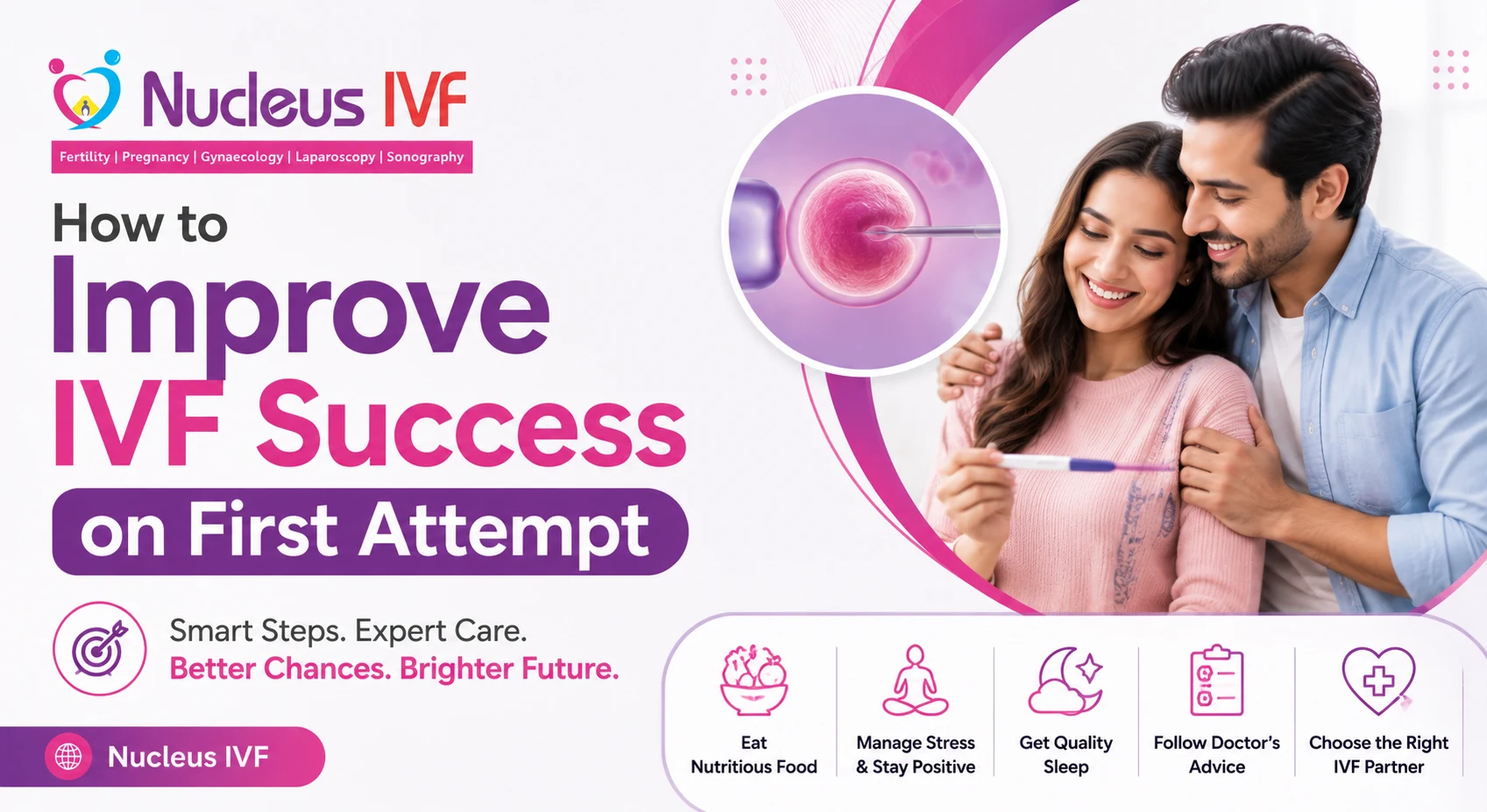
Choose the Right Fertility Clinic
Your first and most important decision is selecting a clinic with a strong track record, experienced embryologists, and personalised care. Look beyond general success rate statistics — ask about outcomes specific to your age group and diagnosis. A clinic that takes time to understand your unique fertility profile and customises your protocol accordingly is far more likely to deliver results.
At your initial consultation, pay attention to how thoroughly your doctor reviews your history, orders baseline investigations, and explains the treatment plan. A one-size-fits-all approach rarely delivers first-attempt success.
Complete All Recommended Pre-IVF Tests
Before beginning stimulation, both partners should undergo a thorough fertility workup. For women, this typically includes:
- Antral Follicle Count (AFC) via ultrasound
- AMH (Anti-Müllerian Hormone) to assess ovarian reserve
- Hormonal profile — FSH, LH, oestradiol, prolactin, thyroid
- Uterine evaluation — sonohysterography or hysteroscopy to rule out polyps, fibroids, or adhesions
For men, a detailed semen analysis covering count, motility, morphology, and DNA fragmentation index is essential. Identifying and addressing any abnormalities before the cycle begins can significantly improve outcomes.
Optimise Your Diet and Nutrition
What you eat in the months leading up to IVF can directly influence egg quality, sperm health, and uterine receptivity. Adopt a fertility-friendly diet that includes:
- Antioxidant-rich foods — berries, leafy greens, nuts, and seeds protect eggs and sperm from oxidative damage
- Healthy fats — avocado, olive oil, and omega-3 rich fish support hormone production
- Lean proteins — eggs, legumes, and poultry aid follicle development
- Complex carbohydrates — whole grains help regulate insulin, which affects ovarian function
- Iron and folate — found in spinach, lentils, and fortified foods, essential for early embryo development
Limit processed foods, refined sugar, trans fats, and excess caffeine. These can negatively impact hormonal balance and egg quality.
Take the Right Supplements
Several supplements have strong evidence supporting their role in IVF preparation:
- Coenzyme Q10 (CoQ10) — improves mitochondrial function in eggs and sperm
- Folic acid or methylfolate — essential for embryo development and neural tube protection
- Vitamin D — low levels are associated with reduced implantation rates
- Omega-3 fatty acids — support embryo quality and reduce inflammation
- Zinc and Selenium — critical for sperm DNA integrity
Always consult your doctor before starting any supplement, as some can interfere with medications or hormone levels.
Maintain a Healthy Weight
Body weight has a direct and measurable impact on IVF outcomes. Both underweight and overweight conditions can disrupt hormone levels, reduce response to stimulation medications, and lower implantation rates.
Aim for a BMI within the healthy range of 18.5 to 24.9. Even modest weight loss of 5 to 10% in women who are overweight can meaningfully improve egg quality and cycle response. Speak with your doctor about a sustainable, fertility-supportive plan.
Exercise – But Keep It Gentle
Regular moderate exercise supports circulation, reduces stress hormones, and maintains a healthy weight all beneficial for IVF. Walking, swimming, yoga, and light cycling are excellent choices during preparation.
However, avoid high-intensity or endurance exercise during the stimulation phase and after embryo transfer. Excessive physical exertion can impair ovarian blood flow and may increase the risk of ovarian torsion during stimulation when follicles are enlarged.
Prioritise Sleep and Stress Management
Chronic stress raises cortisol levels, which can suppress reproductive hormones and reduce ovarian response. Sleep deprivation has similar effects. During your IVF cycle:
- Aim for 7 to 9 hours of quality sleep each night
- Practice mindfulness meditation, gentle yoga, or deep breathing exercises
- Consider counselling or therapy fertility-specialised counsellors can be tremendously helpful
- Limit exposure to negative news and social media comparisons
- Lean on a trusted support network of family or friends
Emotional resilience does not guarantee IVF success, but it significantly improves your experience of the process and your ability to make clear decisions throughout.
Quit Smoking and Alcohol Completely
There is no safe level of smoking or alcohol consumption during IVF preparation. Smoking is directly linked to reduced ovarian reserve, poorer egg quality, lower fertilisation rates, and higher miscarriage risk. Alcohol disrupts hormone levels and embryo implantation.
Both partners should stop smoking and drinking at least three months before the IVF cycle begins, as sperm production takes approximately 72 days to complete a full cycle.
Follow Your Medication Protocol Without Fail
During the IVF cycle itself, strict adherence to your medication schedule is absolutely critical. Injections must be given at the same time each day. Missing or delaying doses can cause premature ovulation, poor follicle development, or cycle cancellation.
Use phone alarms or reminders, and never adjust dosages without speaking to your doctor first. If you experience side effects or confusion about instructions, call your clinic immediately rather than guessing.
Discuss Elective Single Embryo Transfer (eSET)
If you have good quality blastocysts available, your doctor may recommend transferring a single embryo rather than multiple. While it might seem counterintuitive, transferring one high-quality embryo reduces the risks of twin pregnancy complications while maintaining excellent success rates in the right candidates.
Ask your embryologist about blastocyst grading and whether preimplantation genetic testing (PGT-A) is appropriate for your situation — this screens embryos for chromosomal abnormalities before transfer, significantly improving implantation rates per transfer.
Final Thoughts
IVF success on the first attempt is absolutely achievable, and many couples do realise their dream in a single cycle. The key lies in thorough preparation, the right clinical support, and a holistic approach to your health in the months leading up to your cycle.
Every small step you take — from improving your diet to managing stress to following your protocol carefully adds up to a meaningful difference in your overall outcome.
At Nucleus IVF, we work closely with each couple to build a Personalised IVF plan designed for first-attempt success. Connect with our specialists today to begin your journey with confidence.
Dr. Pritam Prakash Sulakhe

Dr. Pritam Prakash Sulakhe
author
Dr. Pritam Prakash Sulakhe has completed his MBBS from B J Government Medical College , Pune which is one of the top medical College in India. He continued his post-graduation as DGO at same institute. After that he opted for Diplomat Of national Board In Obstetrics and Gynecology from Kerala Institute Of Medical Sciences Trivandrum, which is one of the most prestigious institute from South India.
