
Planning IVF in Summer: What Couples Should Know
when couples decide to pursue IVF, every decision feels weighty — including when to start. One persistent question we hear at Nucleus IVF is: “Should we begin our IVF cycle in summer? Is it a better time?” It’s a fair question, and one worth answering clearly. Let’s separate the myths from the medical facts.
The Summer IVF Myth: Where Does It Come From?
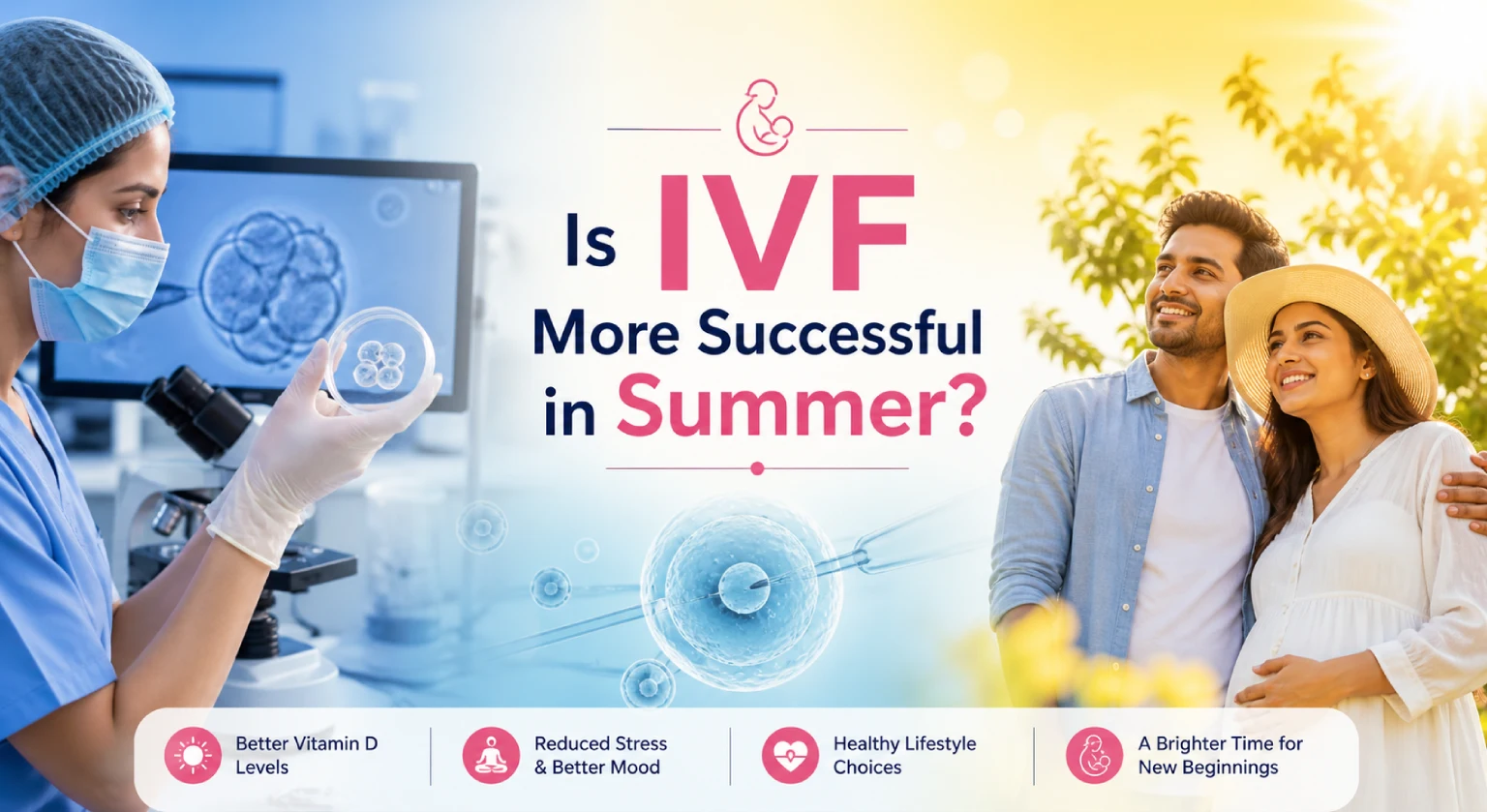
The belief that summer improves IVF outcomes likely stems from a combination of intuition and lifestyle observations. The thinking goes something like this: warmer weather lifts moods, more sunlight means more Vitamin D, and relaxed summer routines reduce stress — all of which could, in theory, support fertility. Some couples also associate seasonal changes with hormonal shifts and believe those shifts might benefit their cycle.
These ideas aren’t entirely without logic. But when it comes to IVF specifically, the science tells a different story.
What the Research Actually Says
Multiple large-scale clinical studies have evaluated whether the season in which IVF is performed affects pregnancy outcomes — and the evidence is consistent.
A nationwide registry study found that clinical pregnancy rates hovered between 36% and 38% across all seasons, with no statistically significant difference between summer and winter. Another major study enrolling nearly 38,000 women found live birth rates of around 50–53% across spring, summer, autumn, and winter — with no season standing out as clearly superior.
A review published in Frontiers in Public Health (2025) confirmed that while some minor regional variations exist — likely linked to lifestyle habits during local holidays rather than biology — there is no overall seasonal effect on IVF success rates.
In short: summer is not inherently better or worse for IVF than any other time of year.
Why Season Doesn’t Matter in IVF
The key reason season has little impact on IVF is that the procedure bypasses natural conception entirely. IVF takes place in a controlled laboratory environment designed to replicate and maintain optimal conditions regardless of what’s happening outside.
Modern IVF laboratories are equipped with:
- Precise temperature regulation to maintain embryo viability
- HEPA air filtration systems to control air quality
- Humidity control to protect egg and sperm quality
- Consistent culture media and embryo incubation conditions
Whether it is peak summer in Pune or the middle of winter, conditions inside the embryology lab remain constant. The embryo doesn’t know what season it is — and that’s exactly the point.
What About Vitamin D and Stress?
Two factors often cited in favour of summer IVF are Vitamin D (more sunlight exposure) and lower stress levels. Both are genuinely important for reproductive health — but neither tips the scale decisively in favour of a particular season.
Research on Vitamin D and IVF outcomes has been mixed. A systematic review and meta-analysis found no consistent association between serum Vitamin D levels and IVF or ICSI success rates. While maintaining healthy Vitamin D levels is worthwhile for overall wellbeing, it is not a reason to time your IVF cycle to a specific season.
As for stress — yes, lower stress supports fertility outcomes in general. But stress is highly individual. For many people, summer brings its own challenges: travel disruptions, heat, social obligations, or work pressures. What matters more than the season is having a reliable support system and the right clinical team — both of which are available year-round.
So When Is the Best Time to Start IVF?
The answer is personal, not seasonal. The right time to begin your IVF journey depends on:
1. Your menstrual cycle: IVF stimulation typically begins on Day 2–5 of your cycle. Your doctor will schedule accordingly — not based on the calendar month.
2. Your hormonal baseline: Levels of FSH, AMH, and other markers determine your ovarian response and help your doctor personalise your protocol.
3. Your overall health: Factors like BMI, thyroid function, uterine health, and sperm quality are far more influential than the weather outside.
4. Emotional readiness: Starting when you feel informed, supported, and mentally prepared matters more than any season.
5. Practical considerations: Clinic schedules, monitoring availability, and your own work or family commitments may influence timing — and that’s perfectly reasonable.
Dr. Pritam Prakash Sulakhe

Dr. Pritam Prakash Sulakhe
author
Dr. Pritam Prakash Sulakhe has completed his MBBS from B J Government Medical College , Pune which is one of the top medical College in India. He continued his post-graduation as DGO at same institute. After that he opted for Diplomat Of national Board In Obstetrics and Gynecology from Kerala Institute Of Medical Sciences Trivandrum, which is one of the most prestigious institute from South India.
