
Imagine a couple who has been trying to conceive for nearly three years. After several consultations, they finally decide to explore IVF.
The female partner completes her fertility investigations. The male partner undergoes a semen analysis, and the reports show acceptable sperm count, motility and morphology.
Everything appears reassuring.
But after an unsuccessful IVF attempt, the couple starts wondering: Could something have been missed?
This is where sperm DNA fragmentation (DFI) becomes an important topic in male fertility.
While a routine semen analysis evaluates the number, movement and shape of sperm, it does not directly measure the quality and integrity of the DNA carried inside them.
According to Dr. Pritam Prakash Sulakhe at Nucleus IVF Centre, Pune, male fertility evaluation involves understanding more than just sperm count. In selected cases, assessing sperm DNA integrity may provide additional information that helps doctors understand certain unexplained fertility challenges.
So, what exactly is sperm DNA fragmentation? Can damaged sperm DNA affect IVF outcomes? And when should couples consider a sperm DNA fragmentation test?
Let’s understand.
What Is Sperm DNA Fragmentation (DFI)?
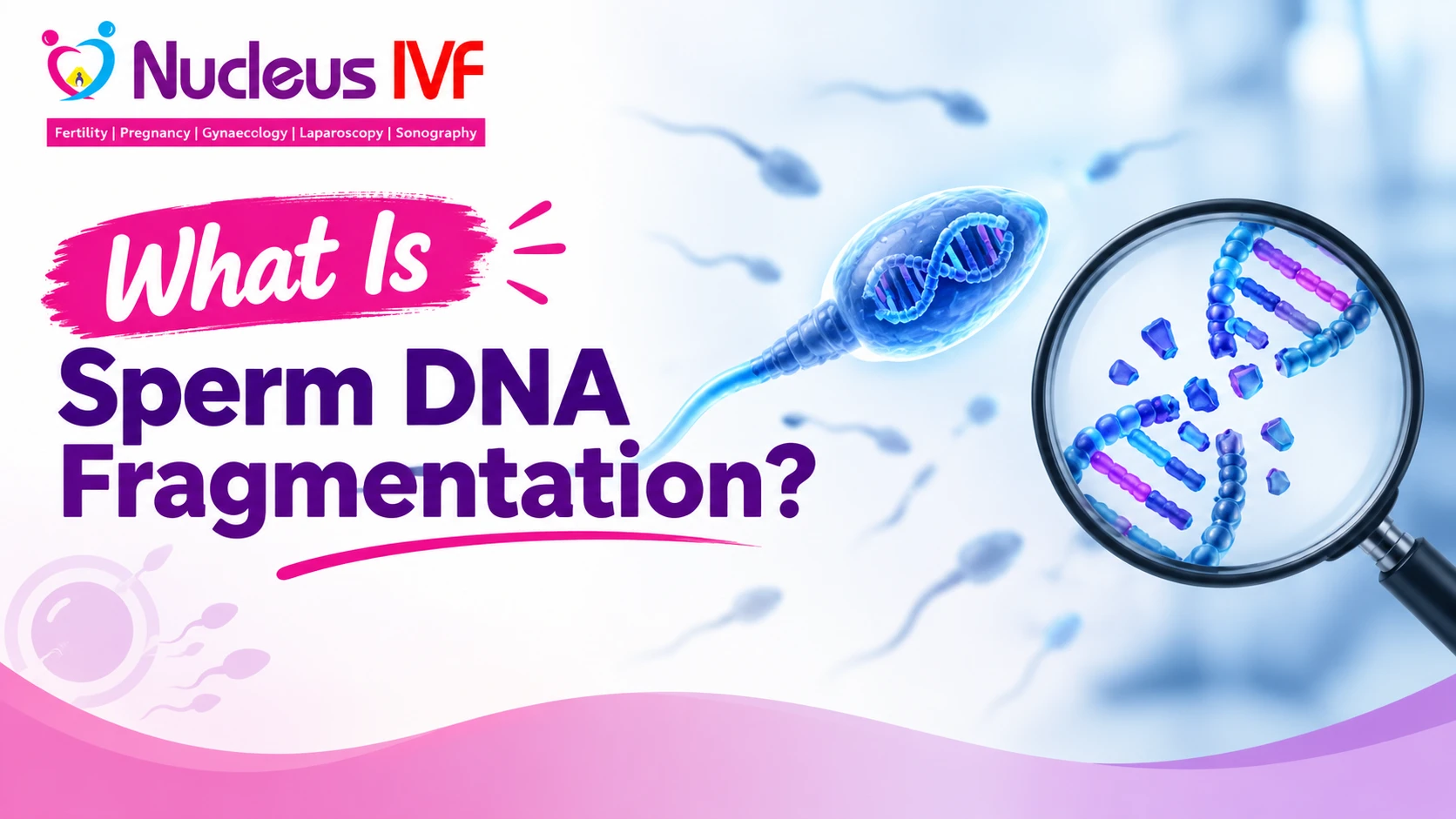
Sperm DNA fragmentation refers to breaks or damage in the genetic material (DNA) present inside sperm cells.
Think of DNA as an instruction manual that carries important genetic information needed for the development of an embryo.
During fertilisation, sperm contributes half of the embryo’s genetic material. If the sperm carries significant DNA damage, it may affect the embryo’s development and reproductive outcomes.
The DNA Fragmentation Index (DFI) represents the proportion of sperm showing DNA damage in a tested sample, according to the specific testing method used.
For example, a higher DFI indicates that a larger proportion of the tested sperm population has fragmented DNA.
However, a high DFI does not automatically mean that a man cannot father a child. It is one part of a broader fertility assessment.
Why Does Sperm DNA Quality Matter Before IVF?
Most couples preparing for IVF focus on egg quality, ovarian reserve, embryo development and uterine health.
But male fertility deserves equal attention.
Here is why sperm DNA integrity matters.
1. It May Affect Fertilisation and Embryo Development
Fertilisation is only the beginning of the pregnancy journey.
After sperm and egg combine, the resulting embryo must divide and develop properly before it can implant in the uterus.
Significant sperm DNA damage may affect embryo development, although the impact varies between individuals and depends on several factors, including egg quality.
2. It May Be Associated With Miscarriage
Some studies have found an association between elevated sperm DNA fragmentation and an increased risk of pregnancy loss.
Although this association is not proof that DNA fragmentation directly causes every miscarriage, it can be an important consideration when evaluating couples with recurrent pregnancy loss.
3. It May Influence IVF and ICSI Outcomes
IVF and ICSI are advanced fertility treatments that help couples overcome several forms of infertility.
However, injecting a sperm directly into an egg through ICSI does not repair damaged sperm DNA.
Therefore, in selected cases, understanding sperm DNA integrity may help fertility specialists evaluate possible contributing factors and individualise treatment.
4. It Can Reveal Information Not Provided by Routine Semen Analysis
A man may have apparently normal sperm count and motility but still have elevated sperm DNA fragmentation.
This is why sperm DNA testing may provide additional information in certain clinical situations.
What Causes High Sperm DNA Fragmentation?
Several biological, medical and lifestyle factors can contribute to sperm DNA damage.
Understanding these factors is the first step towards identifying potentially treatable causes.
1. Oxidative Stress
Oxidative stress occurs when harmful reactive oxygen species (ROS) exceed the body’s antioxidant defence capacity.
Excessive oxidative stress can damage sperm membranes and DNA, affecting overall sperm quality.
2. Smoking and Alcohol Consumption
Smoking exposes the body to harmful chemicals that may increase oxidative stress and negatively affect sperm health.
Excessive alcohol consumption may also contribute to poor reproductive health.
3. Varicocele
A varicocele is an enlargement of veins within the scrotum.
It may increase scrotal temperature and oxidative stress, potentially affecting sperm production and DNA integrity.
4. Infections and Inflammation
Infections or inflammation in the male reproductive tract may increase oxidative stress and contribute to sperm DNA damage.
5. Increasing Paternal Age
As men age, changes in sperm production and DNA integrity may occur.
Advanced paternal age has been associated with increased sperm DNA fragmentation in several studies.
6. Environmental and Lifestyle Factors
Exposure to environmental pollutants, certain occupational chemicals, excessive heat, poor dietary habits and metabolic health problems may contribute to impaired sperm quality.
Not every man exposed to these factors will develop high DFI. Individual evaluation is important.
What Are the Signs and Symptoms of High Sperm DNA Fragmentation?
One of the most confusing aspects of sperm DNA fragmentation is that it generally does not produce noticeable physical symptoms.
A man may feel completely healthy and have a normal sexual life while still having elevated sperm DNA fragmentation.
However, certain fertility-related situations may lead a doctor to consider further evaluation:
Difficulty achieving pregnancy despite apparently normal semen parameters.
Repeated unsuccessful IVF or ICSI cycles.
Recurrent pregnancy loss.
Unexplained infertility.
A diagnosed varicocele.
Previous reproductive tract infections or inflammation.
Important: These situations do not confirm high DFI. A sperm DNA fragmentation test is needed to assess DNA integrity when clinically indicated.
How Is the Sperm DNA Fragmentation Test Performed?
The sperm DNA fragmentation test is a laboratory investigation that evaluates the integrity of sperm DNA.
The process generally involves collecting a semen sample and analysing it using a specialised laboratory technique.
Depending on the laboratory, different testing methods may be used.
1. Sperm Chromatin Structure Assay (SCSA)
SCSA evaluates how susceptible sperm DNA is to denaturation (separation of DNA strands under specific conditions).
It is one of the widely studied methods for assessing sperm DNA fragmentation.
2. TUNEL Assay
The TUNEL test identifies breaks in sperm DNA by detecting exposed DNA ends.
It directly measures certain forms of DNA damage.
3. Sperm Chromatin Dispersion (SCD) Test
Also known as the sperm halo test, this method evaluates the DNA integrity of sperm based on the dispersion of DNA loops after specific laboratory processing.
4. Comet Assay
The Comet assay uses electrophoresis to identify DNA damage in individual sperm cells. Damaged DNA migrates away from the main DNA structure, creating a comet-like appearance under laboratory analysis.
Does a higher DFI always mean IVF will fail?
No. Different testing methods use different reference ranges and thresholds. Results should be interpreted according to the specific assay, laboratory standards and the couple’s fertility history.
A DFI value should never be considered a standalone predictor of IVF success.
What Is a Normal DFI Level?
DFI interpretation depends on the testing method and laboratory.
For example, with SCSA, a DFI around 25% or higher has been associated with reduced pregnancy rates in some studies involving natural conception and IUI.
However, this is not a universal cutoff for every sperm DNA fragmentation test.
| DFI interpretation | General understanding |
|---|---|
| Lower DFI | A smaller proportion of sperm show DNA fragmentation |
| Intermediate DFI | May require clinical interpretation depending on the assay |
| Higher DFI | A larger proportion of sperm show DNA fragmentation |
Your fertility specialist should interpret the result using the laboratory’s validated reference range rather than applying one threshold to every test.
How Can High Sperm DNA Fragmentation Be Treated?
The good news is that some contributing factors may be identified and managed.
Treatment depends on the underlying cause, the severity of DNA fragmentation and the couple’s overall fertility profile.
1. Improve Lifestyle Habits
Healthy lifestyle changes may help improve sperm health.
Some recommendations include:
Stop smoking and avoid tobacco products.
Limit or avoid alcohol.
Maintain a healthy body weight.
Follow a balanced, nutrient-rich diet.
Exercise regularly.
Get adequate sleep.
Avoid excessive heat exposure to the testicles.
These changes support general reproductive health but cannot guarantee that DFI will return to normal.
2. Identify and Treat Varicocele
If a clinically significant varicocele is present, a specialist may evaluate whether treatment is appropriate.
In selected men, varicocele repair may improve sperm parameters and potentially reduce DNA fragmentation.
3. Treat Underlying Infections or Inflammation
If an infection or inflammatory condition is identified, appropriate medical treatment may be recommended.
Antibiotics should only be used when medically indicated.
4. Consider Antioxidants Under Medical Guidance
Antioxidants such as vitamin C, vitamin E, zinc and other nutrients are sometimes considered in male fertility management.
However, evidence that antioxidant supplements improve live birth rates is inconsistent.
Avoid taking high-dose supplements without consulting a fertility specialist.
5. Repeat Testing When Appropriate
Sperm production takes approximately 74 days, followed by additional maturation and transport.
If lifestyle changes or treatment have been recommended, your doctor may consider repeating the test after an appropriate interval to assess any changes.
What Are the IVF Options for Men With High DFI?
When elevated sperm DNA fragmentation is identified, the next step is not necessarily to cancel or postpone IVF.
Instead, the fertility specialist evaluates the complete clinical picture and discusses suitable options.
1. Conventional IVF
In conventional IVF, eggs and sperm are placed together in a laboratory dish, allowing fertilisation to occur naturally.
The suitability of this approach depends on sperm quality and the couple’s fertility history.
2. Intracytoplasmic Sperm Injection (ICSI)
ICSI involves injecting a selected sperm directly into a mature egg.
It can help overcome certain fertilisation problems, particularly when sperm parameters are abnormal.
However, ICSI does not repair DNA fragmentation. It should not be presented as a guaranteed solution for high DFI.
3. Advanced Sperm Selection Techniques
Certain specialised sperm selection approaches, such as PICSI and MACS, may be considered in selected cases.
However, evidence that these techniques consistently improve live birth outcomes in men with high DFI remains limited.
4. Testicular Sperm Retrieval in Selected Cases
In certain men with persistently high sperm DNA fragmentation, a fertility specialist may discuss using surgically retrieved testicular sperm for ICSI.
Some studies suggest that testicular sperm may have lower DNA fragmentation than ejaculated sperm in selected patients.
However, this is an invasive procedure with limitations, and its routine use remains controversial. It should only be considered after careful evaluation and counselling.
When Should You Consider a Sperm DNA Fragmentation Test Before IVF?
Sperm DNA fragmentation testing is not recommended as a routine screening test for every man undergoing fertility evaluation.
However, your fertility specialist may consider it in selected situations, such as:
Recurrent pregnancy loss.
Repeated unexplained IVF or ICSI failure.
Unexplained infertility in an appropriate clinical context.
A clinically diagnosed varicocele with relevant fertility concerns.
Other specific male fertility factors where the result may influence treatment decisions.
The American Urological Association and American Society for Reproductive Medicine (AUA/ASRM) do not recommend sperm DNA fragmentation testing as part of the initial routine evaluation of every infertile couple. They recognise its potential relevance in selected cases, including recurrent pregnancy loss.
The important point is to test when the result can help guide clinical decisions, not simply because another fertility test is available.
Frequently Asked Questions (FAQs)
1. Can a man have normal sperm count but high DNA fragmentation?
Yes. A routine semen analysis evaluates sperm count, motility and morphology, but it does not directly assess sperm DNA integrity. Therefore, normal semen parameters do not always rule out elevated DNA fragmentation.
2. Does high DFI affect IVF success?
Elevated DFI has been associated with poorer reproductive outcomes in some studies, including lower pregnancy rates and increased miscarriage risk. However, it does not mean IVF will necessarily fail.
3. Can sperm DNA fragmentation be reduced naturally?
Some lifestyle changes, such as stopping smoking, maintaining a healthy weight, eating a balanced diet and avoiding excessive heat exposure, may support sperm health. The extent of improvement depends on the underlying cause.
4. Is the sperm DNA fragmentation test painful?
No. It is generally performed using a collected semen sample and does not involve a surgical procedure.
5. Should every man undergo a DFI test before IVF?
No. Routine testing is not recommended for every infertile man. It may be considered when specific fertility concerns or a relevant medical history justify further investigation.
6. Does ICSI solve sperm DNA fragmentation?
No. ICSI helps introduce a selected sperm into an egg but does not repair damaged DNA. The fertility specialist must evaluate the overall clinical situation before recommending treatment.
Conclusion: Better Understanding of Male Fertility Can Make a Difference
For couples preparing for IVF, every detail matters.
While much attention is often given to egg quality, ovarian reserve and uterine health, sperm DNA integrity is another aspect of male fertility that deserves consideration in selected cases.
A normal semen analysis is reassuring, but it does not provide a complete picture of sperm DNA quality.
Understanding sperm DNA fragmentation can help identify possible contributing factors behind unexplained infertility, recurrent pregnancy loss or repeated unsuccessful fertility treatments.
At Nucleus IVF Centre, Pune, Dr. Pritam Prakash Sulakhe believes in evaluating both partners to understand the possible causes of infertility and guide couples towards appropriate treatment options.
If you have experienced repeated IVF failures, unexplained infertility or recurrent pregnancy loss, consider discussing male fertility evaluation with your specialist.
Don’t focus only on sperm count. Understand sperm quality, too.
Visit Nucleus IVF Centre, Pune, to discuss your fertility concerns and take an informed step towards parenthood.
Dr. Pritam Prakash Sulakhe

Dr. Pritam Prakash Sulakhe
author
Dr. Pritam Prakash Sulakhe has completed his MBBS from B J Government Medical College , Pune which is one of the top medical College in India. He continued his post-graduation as DGO at same institute. After that he opted for Diplomat Of national Board In Obstetrics and Gynecology from Kerala Institute Of Medical Sciences Trivandrum, which is one of the most prestigious institute from South India.
