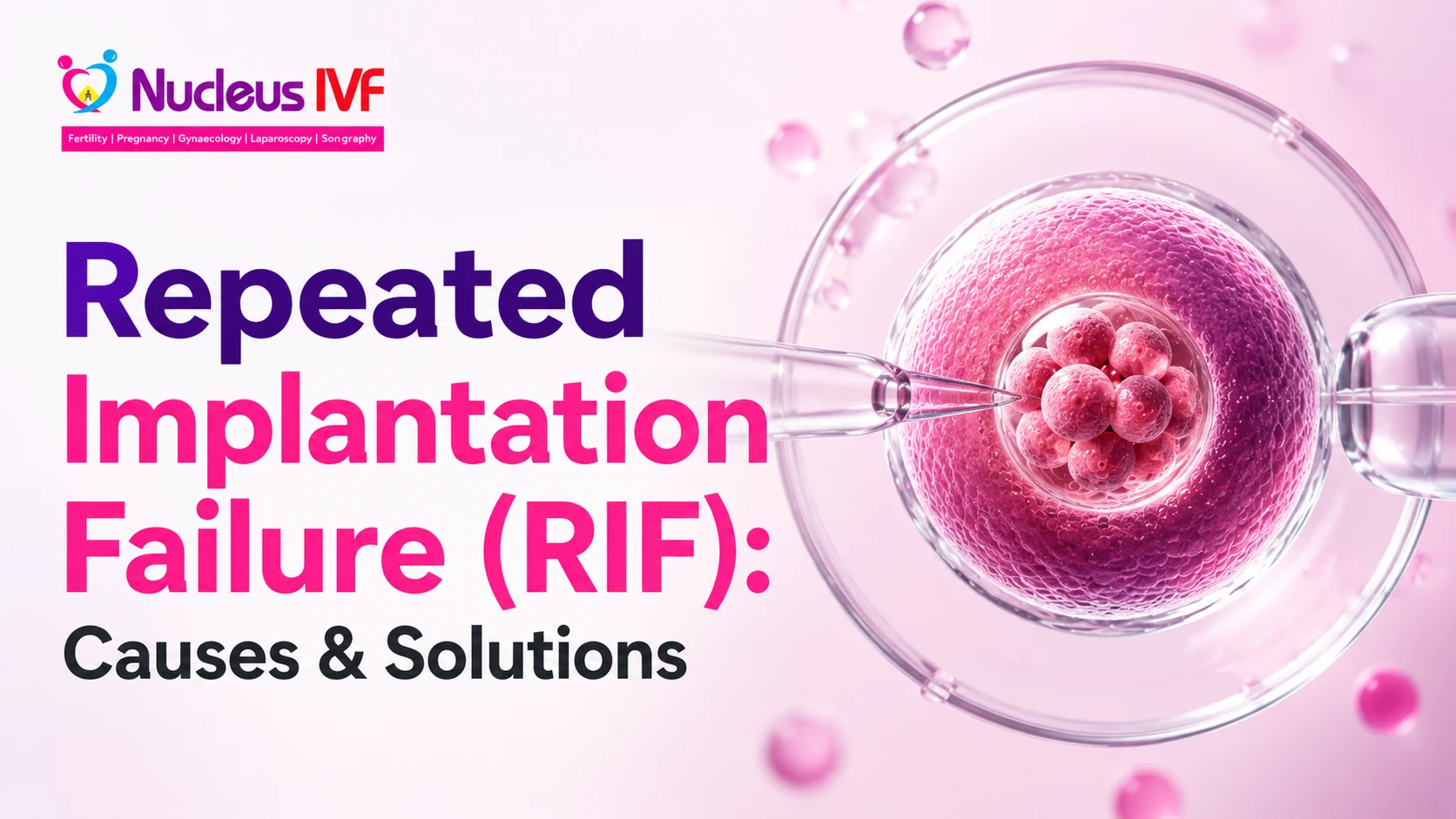
Repeated implantation failure (RIF) can be one of the most emotionally difficult experiences during IVF. When good-quality embryos are transferred but pregnancy does not occur repeatedly, couples naturally want to understand why. At Nucleus IVF Centre, Pune, Dr. Pritam Prakash Sulakhe helps patients evaluate possible reasons for unsuccessful embryo implantation and develop an individualized treatment plan. If you have experienced repeated unsuccessful embryo transfers, visit Nucleus IVF Centre for a detailed fertility evaluation.
RIF does not necessarily mean that pregnancy is impossible. Implantation is a complex process influenced by embryo genetics, the uterus, endometrium, hormones, and other factors. Importantly, there is no single universally accepted definition of RIF, and the number of failed transfers that should trigger an evaluation may vary according to the individual situation.
What Causes Repeated Implantation Failure?
There may be several contributing factors, and sometimes no single cause can be identified.
1. Embryo-Related Factors
Embryo quality is an important factor in implantation. Even an embryo that looks good under a microscope may have chromosomal abnormalities that cannot be identified through appearance alone.
The likelihood of embryo chromosomal abnormalities also increases with maternal age.
Your fertility specialist may therefore review:
- Embryo development and grading
- Number of embryos available
- Day of embryo development at transfer
- Previous embryo transfer outcomes
- Age-related reproductive factors
In selected cases, your doctor may discuss whether additional embryo testing is appropriate.
2. Uterine or Endometrial Problems
The uterus and endometrium need to provide a suitable environment for implantation.
Conditions that may affect implantation include:
- Uterine fibroids
- Endometrial polyps
- Adenomyosis
- Intrauterine adhesions or scar tissue
- Certain uterine abnormalities
- Problems affecting endometrial development
Your fertility specialist may recommend ultrasound, saline sonography, hysteroscopy, or other investigations when clinically appropriate.
3. Endometrial Factors
The thickness and development of the uterine lining are considered during embryo transfer planning.
Hormonal preparation, particularly estrogen and progesterone, plays an important role in preparing the endometrium.
If previous transfers have been unsuccessful, your doctor may review whether the endometrial preparation and timing were appropriate.
4. Hormonal or Metabolic Conditions
Certain medical conditions may influence fertility and pregnancy outcomes.
Depending on your history, your doctor may evaluate conditions such as:
- Thyroid disorders
- Diabetes or abnormal blood sugar levels
- Polycystic ovary syndrome (PCOS)
- Other hormonal abnormalities
The goal is not to perform every possible test, but to identify investigations that are relevant to your individual circumstances.
5. Sperm-Related Factors
Male fertility factors can also contribute to embryo development and reproductive outcomes.
A semen analysis may be recommended, and in selected cases, additional assessment may be considered based on the clinical history.
How Is RIF Evaluated?
After repeated unsuccessful embryo transfers, your fertility specialist may review the complete IVF history rather than focusing on one factor.
The evaluation may include:
- Review of previous IVF cycles: Your doctor may examine stimulation response, egg retrieval, fertilization, embryo development, embryo quality, transfer technique, and pregnancy outcomes.
- Uterine assessment: Ultrasound or other imaging may be recommended to identify structural abnormalities.
- Endometrial evaluation: The doctor may assess the uterine lining and hormone preparation protocol.
- Hormonal and medical assessment: Relevant conditions may be investigated based on your medical history.
- Embryo assessment: Embryo development and quality may be reviewed, and additional genetic testing may be discussed in selected cases.
Treatment and Solutions for Repeated Implantation Failure
Treatment depends entirely on the underlying cause. There is no single treatment that guarantees successful implantation.
1. Optimize the Embryo Transfer Plan
Your fertility specialist may review the timing, embryo stage, transfer technique, and endometrial preparation before another transfer.
2. Treat Uterine Conditions
If a polyp, fibroid, adhesions, or another uterine abnormality is identified, treating the condition may be recommended before another embryo transfer.
3. Optimize Hormonal Support
Your doctor may review estrogen and progesterone preparation and adjust the treatment protocol when appropriate.
4. Consider Embryo Genetic Testing When Appropriate
In selected patients, preimplantation genetic testing for aneuploidy (PGT-A) may be discussed to identify embryos with the expected chromosome number.
However, PGT-A is not appropriate or necessary for every IVF patient. Your fertility specialist can explain its potential benefits and limitations for your specific situation.
5. Address Male-Factor Fertility Issues
If sperm-related factors are identified, your fertility team may recommend appropriate evaluation or treatment before another IVF attempt.
6. Review Lifestyle and General Health
Maintaining a healthy weight, avoiding smoking, limiting alcohol, eating a balanced diet, sleeping adequately, and managing existing health conditions can support overall reproductive health.
Lifestyle changes alone, however, cannot guarantee implantation.
Are Immunological Tests or Treatments Always Needed?
Patients experiencing RIF often come across online recommendations for immune testing, blood-thinning medicines, steroids, or other add-on treatments.
It is important to be cautious.
Not every proposed IVF add-on has strong evidence that it improves live-birth rates, and treatments such as aspirin, heparin, steroids, or immune therapies should not be started without medical advice.
Your fertility specialist should discuss the evidence, possible benefits, risks, and alternatives before recommending any additional treatment.
When Should You See a Fertility Specialist?
Consider discussing further evaluation with a fertility specialist if you have experienced:
- Repeated unsuccessful embryo transfers
- Multiple IVF cycles without pregnancy
- Repeated biochemical pregnancies or early pregnancy losses
- Poor embryo development
- Known uterine abnormalities
- Significant endometriosis or adenomyosis
- Concerns about ovarian reserve or sperm quality
A detailed review of your previous treatment cycles can help determine whether another approach is appropriate.
Can RIF Be Successfully Treated?
In many cases, identifying and addressing a contributing factor can help improve the treatment strategy. However, no treatment can guarantee implantation or pregnancy.
Sometimes the evaluation does not identify a clear explanation. This can be frustrating, but it does not mean that future treatment cannot succeed.
The next IVF cycle should be planned based on your individual medical history rather than simply repeating the previous protocol.
Take the Next Step After Repeated IVF Failure
Repeated implantation failure can leave couples feeling frustrated and uncertain about what to do next. Instead of trying multiple unproven treatments, a structured evaluation can help identify factors that may be worth addressing.
At Nucleus IVF Centre, Pune, Dr. Pritam Prakash Sulakhe provides personalized fertility assessment and guidance for couples who have experienced unsuccessful IVF or repeated embryo transfer failure.
If you have experienced repeated implantation failure, visit Nucleus IVF Centre for a detailed evaluation and discuss the most appropriate next step for your fertility journey.
Dr. Pritam Prakash Sulakhe

Dr. Pritam Prakash Sulakhe
author
Dr. Pritam Prakash Sulakhe has completed his MBBS from B J Government Medical College , Pune which is one of the top medical College in India. He continued his post-graduation as DGO at same institute. After that he opted for Diplomat Of national Board In Obstetrics and Gynecology from Kerala Institute Of Medical Sciences Trivandrum, which is one of the most prestigious institute from South India.
