Polycystic ovary syndrome (PCOS) and polycystic ovarian disease (PCOD) are terms often used interchangeably, but they are not exactly the same. Both can affect menstrual cycles, ovulation, hormones, and fertility. According to Dr. Pritam Prakash Sulakhe, fertility specialist at Nucleus IVF Centre, Pune, understanding the difference between PCOS and PCOD can help women seek timely evaluation and appropriate fertility care when needed.
What Is PCOS?
PCOS (Polycystic Ovary Syndrome) is a hormonal and metabolic condition that can affect women during their reproductive years. It is commonly associated with irregular periods, abnormal ovulation, increased androgen levels, acne, excessive facial or body hair, and difficulty conceiving.
PCOS is one of the leading causes of ovulatory infertility. However, having PCOS does not mean that pregnancy is impossible. With appropriate diagnosis and treatment, many women with PCOS can successfully conceive.
PCOS may also be associated with insulin resistance, weight-related concerns, and an increased risk of conditions such as type 2 diabetes. Therefore, management should focus not only on fertility but also on overall reproductive and metabolic health.
What Is PCOD?
PCOD (Polycystic Ovarian Disease) is a term commonly used to describe a condition involving hormonal imbalance and ovarian dysfunction. Women with PCOD may experience irregular periods, delayed ovulation, weight gain, acne, or difficulty conceiving.
Unlike PCOS, which is a recognized medical syndrome with defined diagnostic criteria, PCOD is often used more broadly in everyday clinical discussions. Importantly, seeing multiple small follicles on an ultrasound does not automatically mean a woman has PCOS.
A proper medical evaluation is important because irregular periods or fertility problems can have several possible causes.
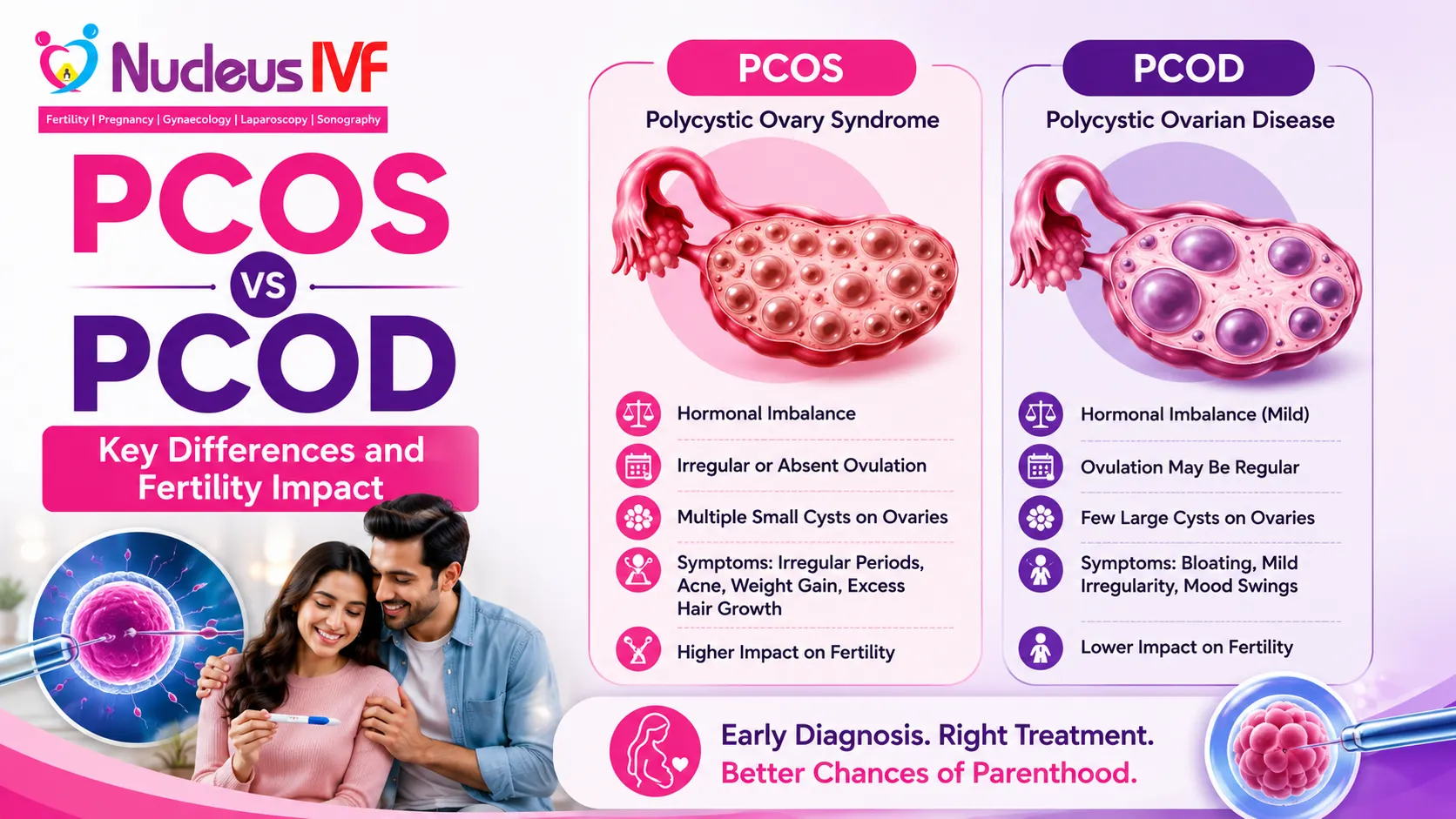
PCOS vs PCOD: Key Differences
| PCOS | PCOD |
|---|---|
| A recognized hormonal and metabolic syndrome | A commonly used term for ovarian dysfunction |
| Often involves elevated androgens and irregular ovulation | May involve hormonal imbalance and irregular ovulation |
| Can significantly affect fertility | May affect fertility depending on ovulation and other factors |
| May be associated with insulin resistance and metabolic risks | Symptoms and severity can vary widely |
| Requires clinical evaluation and exclusion of other causes | Diagnosis depends on individual symptoms and medical assessment |
The terms can sometimes be used differently by healthcare professionals, so women should focus on the actual symptoms, test results, and diagnosis rather than the label alone.
How Can PCOS and PCOD Affect Fertility?
The biggest fertility concern is irregular or absent ovulation. If ovulation does not happen regularly, identifying the fertile window becomes difficult and the chances of natural conception may decrease.
PCOS is recognized as a major cause of anovulation and infertility. However, fertility treatment can help restore or support ovulation depending on the individual situation. Treatment may include lifestyle changes, medicines to induce ovulation, and assisted reproductive techniques such as IUI or IVF when appropriate.
Other fertility factors should also be considered, including ovarian reserve, fallopian tube health, sperm quality, age, and other reproductive conditions.
Can Women With PCOS or PCOD Get Pregnant?
Yes. PCOS or PCOD does not automatically mean infertility.
The right treatment depends on why pregnancy is not occurring. Some women may conceive naturally after improving ovulation and addressing lifestyle or metabolic factors. Others may need fertility medicines, IUI, or IVF.
If you have irregular periods, prolonged gaps between periods, signs of hormonal imbalance, or have been trying to conceive without success, a fertility evaluation can help identify the underlying cause.
When Should You See a Fertility Specialist?
Consider consulting a fertility specialist if:
- Your periods are consistently irregular or absent.
- You have difficulty identifying ovulation.
- You have been trying to conceive for 12 months without success.
- You are 35 or older and have been trying for 6 months.
- You have known PCOS or other reproductive health concerns.
- You have experienced recurrent pregnancy loss or previous fertility treatment failure.
At Nucleus IVF Centre, Pune, Dr. Pritam Prakash Sulakhe provides individualized fertility evaluation and treatment based on each couple’s reproductive needs.
Take the Next Step Toward Parenthood
PCOS and PCOD can affect fertility, but they are manageable conditions, and many women can achieve pregnancy with appropriate care. Early evaluation can help identify ovulation problems and other fertility factors before treatment is planned.
If you have PCOS, PCOD, irregular periods, or difficulty conceiving, visit Nucleus IVF Centre, Pune, and consult Dr. Pritam Prakash Sulakhe for personalized fertility guidance.
Dr. Pritam Prakash Sulakhe

Dr. Pritam Prakash Sulakhe
author
Dr. Pritam Prakash Sulakhe has completed his MBBS from B J Government Medical College , Pune which is one of the top medical College in India. He continued his post-graduation as DGO at same institute. After that he opted for Diplomat Of national Board In Obstetrics and Gynecology from Kerala Institute Of Medical Sciences Trivandrum, which is one of the most prestigious institute from South India.
