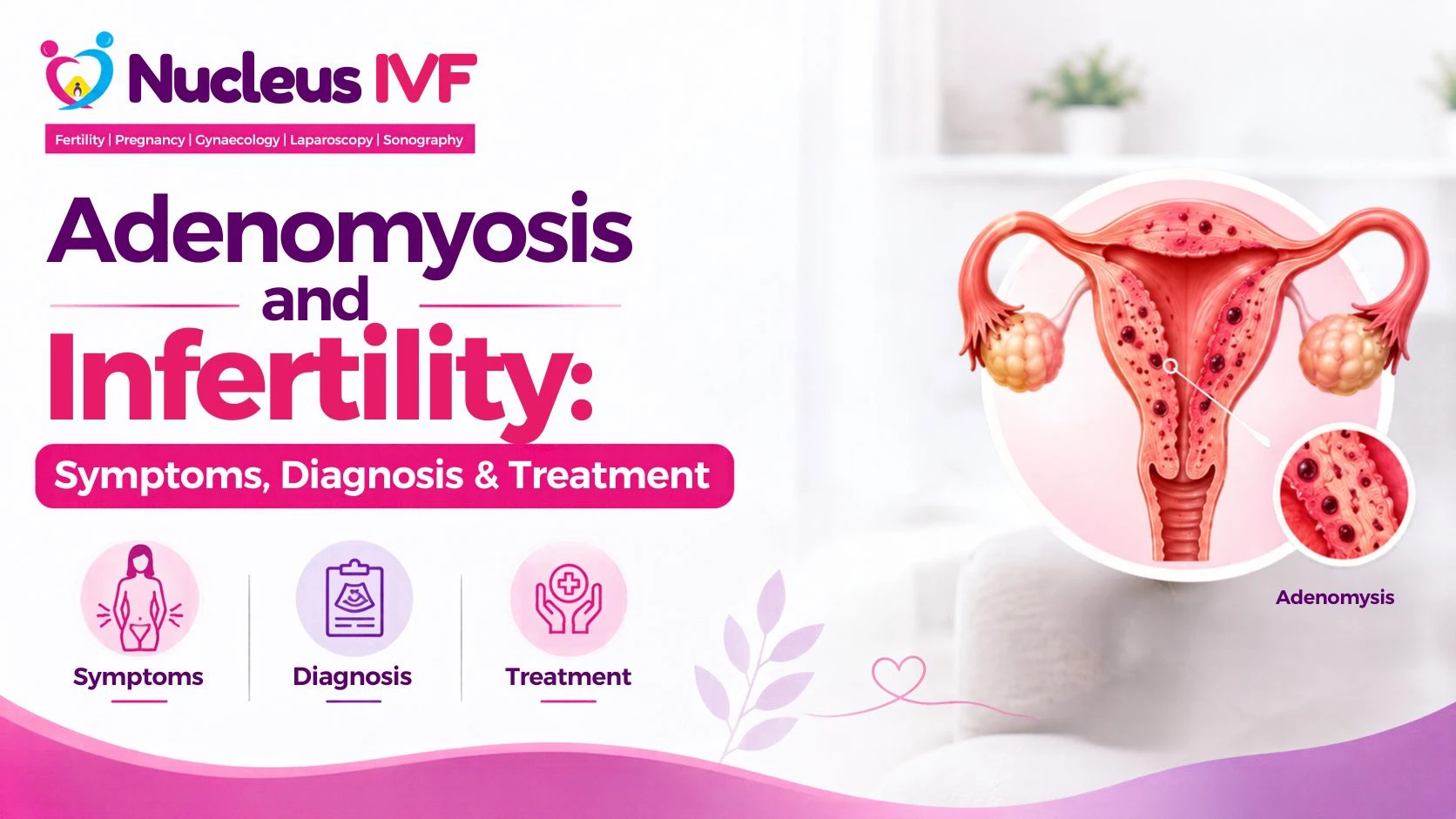
Adenomyosis is a condition in which tissue similar to the lining of the uterus grows into the muscular wall of the uterus. It can cause the uterus to become enlarged and may lead to inflammation, heavy menstrual bleeding, and painful periods.
For some women, adenomyosis may also be associated with difficulty conceiving or pregnancy complications. At Nucleus IVF Centre, Pune, Dr. Pritam Prakash Sulakhe helps women understand how adenomyosis may be affecting their fertility and discusses treatment options based on their individual fertility goals. If you have painful periods, heavy bleeding, or difficulty conceiving, visit Nucleus IVF Centre for a personalized fertility evaluation.
Common Symptoms of Adenomyosis
Some women with adenomyosis have few or no symptoms. When symptoms occur, they may include:
- Painful or heavy periods
- Pelvic pain
- Lower abdominal discomfort
- Pain during intercourse
- Bloating or a feeling of heaviness in the pelvis
- Enlarged or tender uterus
- Difficulty conceiving
Heavy or painful periods alone do not confirm adenomyosis because similar symptoms can occur with conditions such as fibroids and endometriosis.
How Can Adenomyosis Affect Fertility?
Adenomyosis does not mean that pregnancy is impossible. However, research suggests that adenomyosis may be associated with reduced fertility in some women.
Possible reasons include:
1. Changes in the Uterine Muscle
Adenomyosis can alter the structure and function of the uterine muscle. These changes may affect normal uterine contractions and the environment in which an embryo needs to implant.
2. Inflammation
Adenomyosis can be associated with an inflammatory environment within the uterus. Inflammation may potentially affect implantation and reproductive outcomes.
3. Changes in the Endometrium
The condition may affect the normal relationship between the uterine lining and underlying muscle, potentially influencing implantation.
4. Association With Other Fertility Conditions
Adenomyosis can occur alongside endometriosis or uterine fibroids. When multiple conditions are present, identifying the factors affecting fertility becomes particularly important.
Adenomyosis vs Endometriosis
Adenomyosis and endometriosis are related but different conditions.
Adenomyosis: Tissue similar to the uterine lining grows within the muscular wall of the uterus.
Endometriosis: Tissue similar to the uterine lining grows outside the uterus, commonly affecting the ovaries, fallopian tubes, or pelvic tissues.
Both conditions can cause painful periods and may be associated with infertility. A fertility specialist can help determine which condition may be contributing to your symptoms.
How Is Adenomyosis Diagnosed?
Diagnosis usually begins with your symptoms and medical history, followed by a pelvic examination and imaging.
- Ultrasound
A transvaginal ultrasound is commonly used to evaluate the uterus. Certain ultrasound findings may suggest adenomyosis.
- MRI
An MRI may provide additional information when the diagnosis is uncertain or when detailed assessment of the uterus is required.
Your doctor may also recommend other fertility investigations depending on your age, symptoms, and pregnancy history.
Adenomyosis and Fertility Testing
If you are having difficulty conceiving, your evaluation may include:
- Ovarian reserve assessment
- Ultrasound examination
- Assessment of the uterus and endometrium
- Fallopian tube evaluation when appropriate
- Semen analysis for the male partner
- Relevant hormonal or medical investigations
The aim is to understand your overall fertility rather than assuming adenomyosis is the only cause.
Treatment Options for Adenomyosis
Treatment depends on your symptoms, age, fertility goals, severity of the condition, and whether you are currently trying to conceive.
1. Medication
Hormonal treatments may help control pain and heavy bleeding. However, many hormonal treatments prevent pregnancy while they are being used, so treatment needs to be planned according to your fertility goals.
Pain-relieving medications may also be recommended for symptom management.
2. Fertility Treatment
For women who are having difficulty conceiving, fertility treatment may be considered.
Depending on the individual situation, options can include:
- Ovulation-related treatment in selected cases
- IUI in appropriate patients
- IVF
- ICSI when indicated
For some patients, IVF may be considered when natural conception is difficult or when other fertility factors are present.
3. Surgical Treatment
Surgery for adenomyosis is more complex than treatment for some other uterine conditions because adenomyosis can involve the muscular wall of the uterus.
In carefully selected cases, fertility-preserving surgery may be considered. However, the potential benefits and risks—including effects on future pregnancy—need to be discussed thoroughly with a specialist.
Can You Get Pregnant With Adenomyosis?
Yes. A diagnosis of adenomyosis does not automatically mean that you cannot become pregnant.
Your fertility outlook depends on several factors, including:
- Age
- Ovarian reserve
- Severity of adenomyosis
- Uterine anatomy
- Presence of endometriosis or fibroids
- Fallopian tube function
- Sperm health
- Previous fertility treatment
A personalized evaluation can help determine the most appropriate next step.
When Should You See a Fertility Specialist?
Consider consulting a fertility specialist if you have adenomyosis and:
- Have been trying to conceive without success
- Experience severe or worsening period pain
- Have very heavy menstrual bleeding
- Have experienced recurrent pregnancy loss
- Have a history of endometriosis or fibroids
- Are considering IVF
- Want to understand your fertility options before delaying pregnancy
Early evaluation may be particularly useful because age and ovarian reserve are important factors in fertility.
Take the Next Step Toward Better Fertility Care
Adenomyosis can affect the uterus and may contribute to infertility in some women, but it does not mean that pregnancy is impossible. Accurate diagnosis and an individualized treatment plan can help you understand your options.
At Nucleus IVF Centre, Pune, Dr. Pritam Prakash Sulakhe provides personalized fertility evaluation and treatment guidance for women experiencing adenomyosis and infertility.
If you have adenomyosis, painful periods, or difficulty conceiving, visit Nucleus IVF Centre to discuss your fertility concerns and explore the treatment options suitable for you.
Dr. Pritam Prakash Sulakhe

Dr. Pritam Prakash Sulakhe
author
Dr. Pritam Prakash Sulakhe has completed his MBBS from B J Government Medical College , Pune which is one of the top medical College in India. He continued his post-graduation as DGO at same institute. After that he opted for Diplomat Of national Board In Obstetrics and Gynecology from Kerala Institute Of Medical Sciences Trivandrum, which is one of the most prestigious institute from South India.
