
The two-week wait (2WW) is the period between embryo transfer and your pregnancy test. It can be an emotional time because you may notice different symptoms and wonder whether they indicate pregnancy.
At Nucleus IVF Centre, Pune, Dr. Pritam Prakash Sulakhe helps patients understand what to expect after embryo transfer and provides personalized guidance throughout the IVF journey. If you have questions or concerns during your 2WW, visit Nucleus IVF Centre for expert fertility care.
The waiting period can feel stressful, but remember that symptoms alone cannot confirm whether an embryo has implanted successfully. Hormonal medicines used during IVF can also cause symptoms similar to early pregnancy.
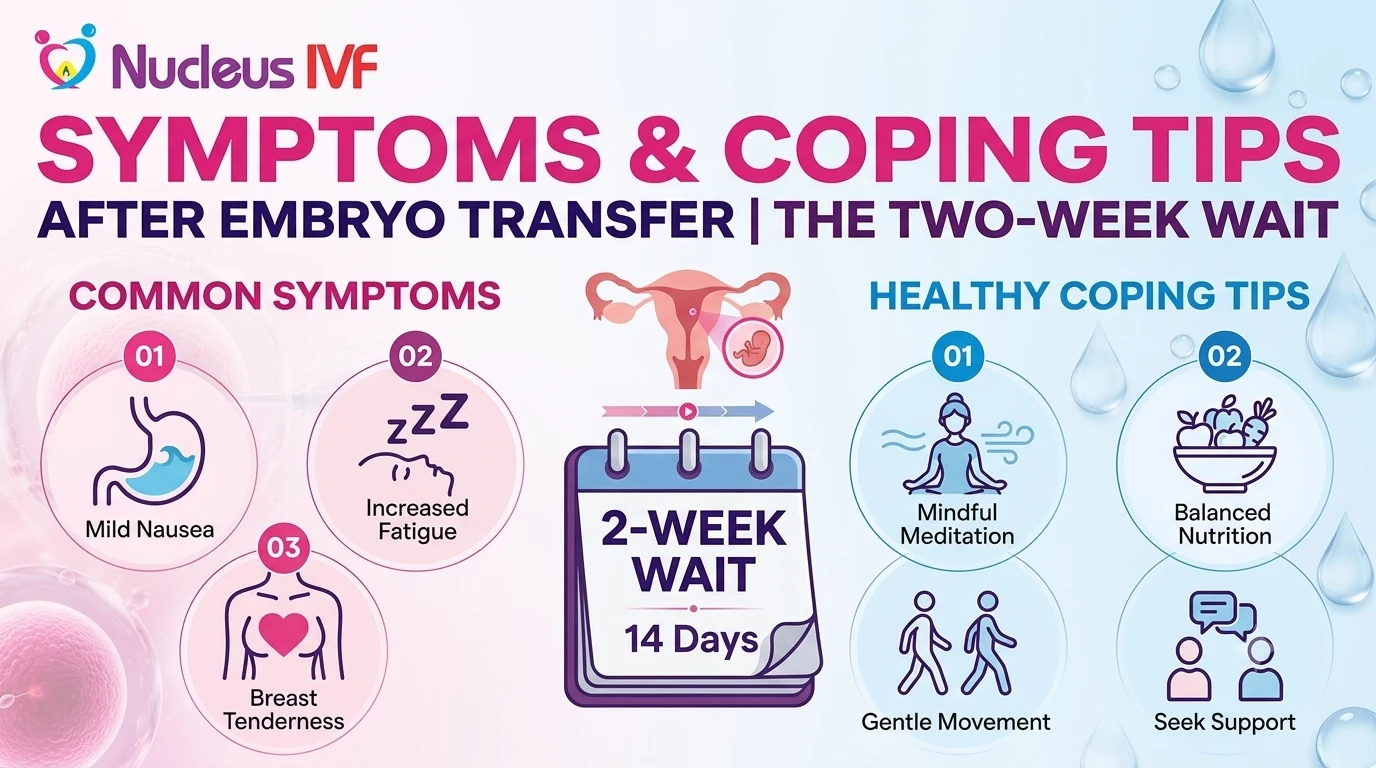
The waiting period can feel stressful, but remember that symptoms alone cannot confirm whether an embryo has implanted successfully. Hormonal medicines used during IVF can also cause symptoms similar to early pregnancy.
Common Symptoms During the 2WW
Every woman experiences the waiting period differently. Some may experience several symptoms, while others may feel completely normal.
1. Mild Cramping
Light abdominal or pelvic cramping may occur after embryo transfer. It can be related to the transfer procedure, hormonal changes, or other normal changes during the treatment cycle.
Mild cramping does not necessarily mean that implantation has occurred.
2. Breast Tenderness
Breast soreness, heaviness, or sensitivity can occur because of increased progesterone levels. These symptoms can also occur in early pregnancy, making them difficult to interpret.
3. Bloating
Hormonal medications can cause bloating or a feeling of fullness. Mild bloating during the 2WW is relatively common.
4. Fatigue
Feeling tired or needing more rest may occur during this period. Progesterone supplementation can contribute to tiredness, while emotional stress may also affect your energy levels.
5. Spotting
Some women notice light spotting after embryo transfer. However, spotting can have different causes and does not automatically indicate either pregnancy or treatment failure.
If you experience heavy bleeding, severe pain, dizziness, breathing difficulties, or other concerning symptoms, contact your fertility clinic promptly.
Do 2WW Symptoms Confirm Pregnancy?
No.
This is one of the most important things to remember during the two-week wait.
Symptoms such as cramps, breast tenderness, fatigue, bloating, or nausea may occur because of fertility medications, particularly progesterone. Similarly, having no symptoms does not mean that the treatment has failed.
The most reliable way to determine whether implantation has resulted in pregnancy is to take the pregnancy test on the date recommended by your fertility specialist.
How to Cope During the Two Week Wait
1. Avoid Constantly Checking Symptoms
It is natural to look for signs of pregnancy, but checking your body every few hours can increase anxiety. Try to focus on your normal routine instead.
2. Follow Your Medication Schedule
Continue prescribed medicines exactly as instructed by your fertility specialist. Do not stop progesterone or other medications simply because you experience symptoms or do not experience any symptoms.
3. Stay Gently Active
Unless your doctor has advised otherwise, normal light activities are generally preferable to complete bed rest. Avoid activities that your fertility team has specifically asked you to avoid.
4. Eat a Balanced Diet
Choose nutritious meals containing vegetables, fruits, whole grains, protein, and adequate fluids. You do not need a special “implantation diet” to guarantee success.
5. Limit Internet Searches
Searching for every possible IVF symptom can increase anxiety. Remember that two people can experience completely different symptoms and still have the same outcome.
6. Keep Yourself Occupied
Plan simple activities that help you relax, such as reading, watching a movie, spending time with family, listening to music, or pursuing a hobby.
7. Talk to Someone You Trust
The emotional side of IVF can be challenging. Speaking with your partner, family member, trusted friend, or fertility counselor can make the waiting period easier.
When Should You Take a Pregnancy Test?
Your fertility clinic will tell you when to take the pregnancy test. Testing too early can create unnecessary confusion because pregnancy hormone levels may still be too low to detect reliably.
A blood beta-hCG test may be recommended by your fertility specialist to confirm pregnancy.
Avoid interpreting an early home pregnancy test without discussing the result with your fertility team.
When Should You Contact Your Fertility Clinic?
Contact your fertility specialist if you experience symptoms that concern you, particularly:
- Heavy vaginal bleeding
- Severe or persistent abdominal pain
- Significant abdominal swelling
- Shortness of breath
- Fainting or severe dizziness
- Any unusual or rapidly worsening symptoms
Your fertility clinic can determine whether further assessment is needed.
Final Thoughts
The two-week wait after embryo transfer can be one of the most emotionally challenging parts of IVF. Try not to judge your chances based on symptoms—or the absence of symptoms. Follow your medication schedule, maintain a healthy routine, stay connected with your support system, and wait for the pregnancy test recommended by your fertility specialist.
If you are undergoing IVF or have concerns after embryo transfer, consult Dr. Pritam Prakash Sulakhe at Nucleus IVF Centre, Pune for personalized guidance and support throughout your fertility journey.
Book a fertility consultation with Nucleus IVF Centre and take your next step toward parenthood with informed, compassionate care.
Dr. Pritam Prakash Sulakhe

Dr. Pritam Prakash Sulakhe
author
Dr. Pritam Prakash Sulakhe has completed his MBBS from B J Government Medical College , Pune which is one of the top medical College in India. He continued his post-graduation as DGO at same institute. After that he opted for Diplomat Of national Board In Obstetrics and Gynecology from Kerala Institute Of Medical Sciences Trivandrum, which is one of the most prestigious institute from South India.
