How Is IVF Pregnancy Different from Natural Pregnancy?
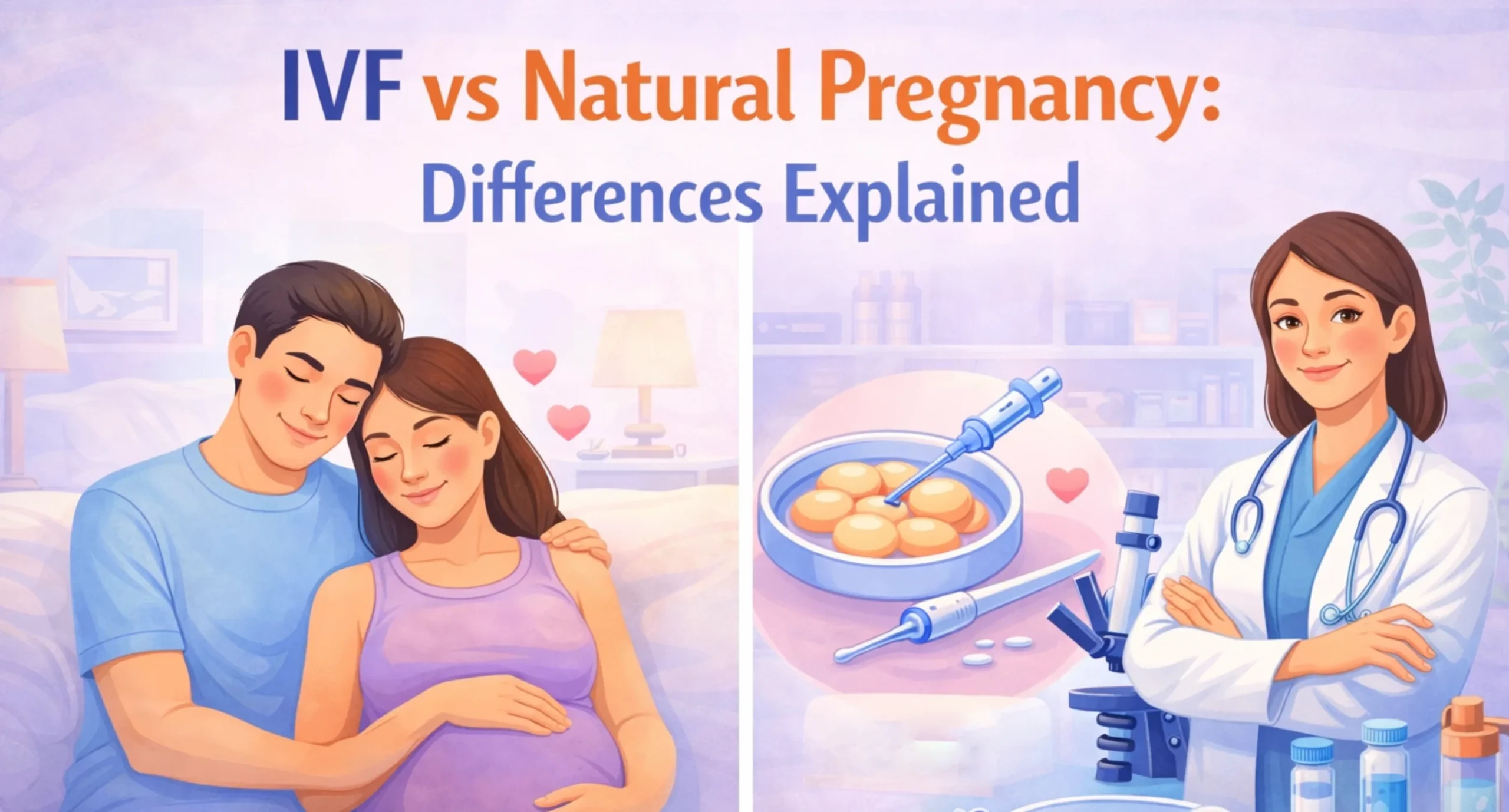
IVF pregnancy differs from natural pregnancy mainly in the method of conception and level of monitoring. IVF involves medical assistance and closer observation throughout the process, while natural pregnancy occurs without clinical intervention.
What is Natural Pregnancy?
Natural pregnancy occurs when a woman conceives without medical intervention. During ovulation, the ovary releases an egg, which is fertilized by sperm inside the fallopian tube. The fertilized egg then travels to the uterus and implants itself in the uterine lining.
Key Features:
- No medical assistance required
- Happens through regular intercourse
- Fertilization occurs inside the body
- Depends on natural fertility health of both partners
What is IVF Pregnancy?
IVF (In Vitro Fertilization) is a medical process where fertilization happens outside the body in a laboratory. The embryo is then transferred into the uterus.
Key Steps in IVF:
- Ovarian stimulation with medications
- Egg retrieval from ovaries
- Fertilization with sperm in lab
- Embryo development
- Embryo transfer into uterus
IVF is commonly recommended for couples facing infertility issues such as blocked fallopian tubes, low sperm count, or unexplained infertility.
IVF vs Natural Pregnancy: Major Differences
1. Method of Conception
- Natural Pregnancy: Fertilization occurs naturally inside the body
- IVF Pregnancy: Fertilization occurs in a controlled lab environment
This is the most fundamental difference between the two.
2. Medical Involvement
- Natural Pregnancy: No medical procedures required
- IVF Pregnancy: Requires multiple medical steps, monitoring, and medications
IVF involves close supervision by fertility specialists to increase success rates.
3. Time to Conceive
- Natural Pregnancy: May happen quickly or take several months/years
- IVF Pregnancy: Faster results once treatment begins, especially in infertility cases
IVF can reduce uncertainty when natural conception is difficult.
4. Success Rates
- Natural Pregnancy: Depends on age, health, and fertility factors
- IVF Pregnancy: Success rates vary but can be optimized with advanced techniques
For women above 35 or couples with fertility issues, IVF often provides better chances.
5. Monitoring During Pregnancy
- Natural Pregnancy: Standard prenatal checkups
- IVF Pregnancy: More frequent monitoring, especially in early stages
Doctors closely track IVF pregnancies to ensure implantation success.
6. Emotional Journey
- Natural Pregnancy: Usually less stressful if conception happens easily
- IVF Pregnancy: Can be emotionally intense due to procedures, waiting periods, and expectations
Couples undergoing IVF often require emotional support and counseling.
7. Cost Factor
- Natural Pregnancy: Minimal medical cost
- IVF Pregnancy: Involves significant financial investment
However, IVF offers hope where natural methods fail.
8. Risk Factors
- Natural Pregnancy: Lower medical risks in conception phase
- IVF Pregnancy: Slightly higher chances of multiple pregnancy or complications
Modern IVF techniques have significantly reduced these risks.
Similarities Between IVF and Natural Pregnancy
Despite the differences in conception, pregnancy after implantation is largely the same.
- Baby develops naturally in the uterus
- Pregnancy symptoms are similar
- Delivery process is similar
- Emotional bonding remains the same
Once pregnancy is established, both journeys become almost identical.
Who Should Consider IVF?
IVF is recommended for:
- Couples trying to conceive for over a year without success
- Women with blocked or damaged fallopian tubes
- Male infertility issues
- Advanced maternal age
- Unexplained infertility
Consulting a fertility expert can help determine the right treatment plan.
Which is Better: IVF or Natural Pregnancy?
There is no “better” option—only what works best for your situation.
- If you can conceive naturally, that is ideal
- If not, IVF provides a scientifically advanced and effective solution
The goal is the same: a healthy pregnancy and a healthy baby.
Conclusion
Understanding IVF vs natural pregnancy helps remove confusion and fear around fertility treatments. While natural pregnancy is simpler and less invasive, IVF opens doors for couples who otherwise may struggle to conceive.
With the right medical support, lifestyle balance, and emotional strength, both paths can lead to successful parenthood.
Dr. Pritam Prakash Sulakhe

Dr. Pritam Prakash Sulakhe
author
Dr. Pritam Prakash Sulakhe has completed his MBBS from B J Government Medical College , Pune which is one of the top medical College in India. He continued his post-graduation as DGO at same institute. After that he opted for Diplomat Of national Board In Obstetrics and Gynecology from Kerala Institute Of Medical Sciences Trivandrum, which is one of the most prestigious institute from South India.
